Career Development, Career Planning, Career Tips, jobs, networking, unemployment

The Cold Reality of Pivoting Careers While Unemployed

Pivoting careers is never easy. It’s a process that requires re-branding yourself, learning new skills, and often convincing hiring managers that your experience is transferable. Doing all of that while unemployed? That’s a whole different challenge—and one that many professionals, myself included, are facing right now.

The Stigma of Extended Unemployment

No matter how much we talk about breaking the stigma of gaps on a résumé, the reality is that being out of work for an extended period does raise questions in the eyes of employers. Algorithms in applicant tracking systems often filter out resumes with career breaks, and even when you do get in front of a recruiter, there’s sometimes an unspoken bias: “Why hasn’t anyone else hired you yet?”

This can make it even harder to pivot into a new career direction, where you’re not only battling the unemployment bias but also trying to prove you belong in a new function or industry.

The Hard Truth: Sometimes You Have to Step Back to Move Forward

One of the cold realities of job searching after a long unemployment stretch is that you may need to accept a step back—whether in title, pay, or both—to land your next opportunity.

That doesn’t mean you’ve failed. In fact, it can be a strategic choice. Sometimes a lateral or downward move is exactly what you need to:

  • Rebuild momentum in your career.
  • Gain exposure to a new industry or skill set.
  • Prove your adaptability and resilience.

Think of it less as a setback and more as a reset button—an intentional move to get yourself back in the game.

Why Networking Beats Applying in Today’s Market

The job market is more oversaturated than ever. Hundreds of qualified candidates apply for a single opening, and most never hear back. Submitting applications into the void isn’t a strategy—it’s a drain on your energy and confidence.

Networking, on the other hand, changes the game. Conversations open doors that applications can’t. Whether it’s a coffee chat, an informational interview, or a simple message on LinkedIn, relationships are where opportunities live. As the saying goes: people hire people, not résumés.

Some of the most effective networking tactics I’ve seen include:

  • Reconnecting with former colleagues who know your value.
  • Reaching out to people in your target industry to learn (not just to ask for a job).
  • Participating in professional groups, associations, or virtual meetups.
  • Contributing publicly—sharing insights, writing posts, or commenting thoughtfully—so your expertise stays visible.

Shifting the Mindset

The hardest part about this process isn’t the applications, the rejections, or even the interviews. It’s the mindset shift. Accepting that your next step may not be a perfect upward trajectory can sting. But when you reframe it as a strategic career pivot rather than a failure, the path forward becomes clearer.

Resilience, humility, and adaptability are not just buzzwords—they’re survival skills in today’s market. And they’re also the very qualities that make you an asset to future employers.

A Call to Those in the Same Boat

If you’re navigating unemployment while trying to pivot careers, know this: you’re not alone. Many talented professionals are walking this road right now. The oversaturated market doesn’t diminish your skills, your experience, or your worth.

What it does mean is that strategy matters more than ever. Be open to redefining success, willing to take a step back if it sets you up for future growth, and bold enough to lean on your network instead of going it alone.

Because sometimes the most important part of a pivot isn’t the direction of the move—it’s the fact that you keep moving.

Recruiting Tips

Transferable Skills: The Secret Weapon in Selling Yourself as a Job Candidate

How to confidently communicate your value—even if you’re pivoting careers, returning to work, or feeling “underqualified”

When it comes to landing your next job, talent alone isn’t enough. Your skills matter—but so does your ability to clearly communicate how those skills solve problems, create impact, and align with the needs of the employer.

Whether you’re switching industries, reentering the workforce, or applying for a role that feels like a stretch, the key to standing out is learning how to leverage and sell your transferable skills.

Let’s break it down.


What Are Transferable Skills?

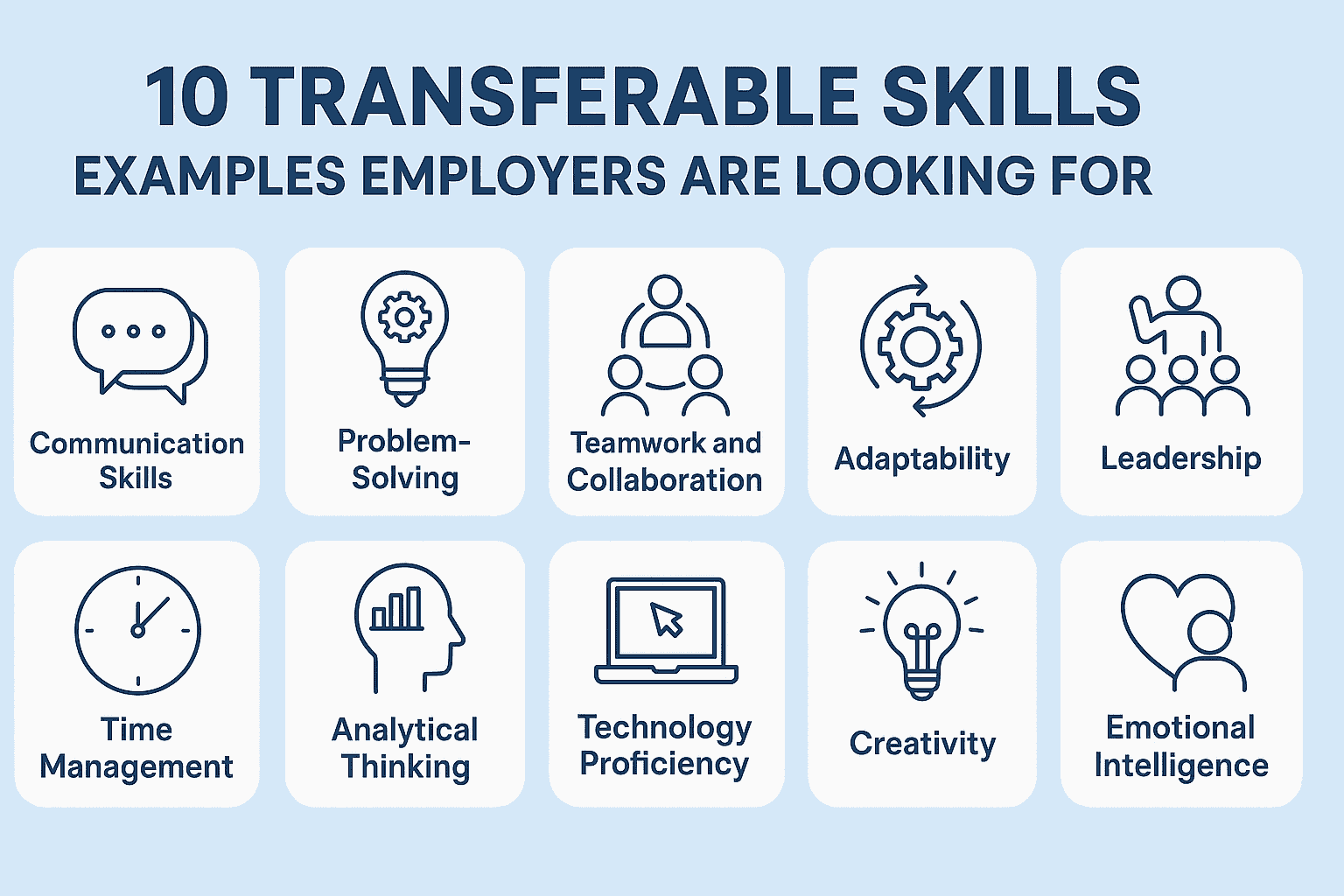
Transferable skills are abilities and strengths that carry over from one job or industry to another. These can be hard skills (like data analysis, project management, or budgeting) or soft skills (like leadership, communication, and adaptability).

They’re the universal tools in your professional toolbox—ready to be applied in different settings.

Examples include:

  • Project management
  • Cross-functional collaboration
  • Training and mentoring
  • Problem-solving
  • Digital literacy
  • Strategic thinking
  • Customer service
  • Conflict resolution
  • Change management
  • Emotional intelligence

Why Transferable Skills Matter More Than Ever

In a job market that’s constantly evolving—thanks to AI, remote work, and industry disruptions—employers value adaptability. They want to hire people who can jump in, learn quickly, and make an impact, even without traditional experience in the role.

That’s why transferable skills are gold. They demonstrate:

  • Your ability to evolve and grow
  • Your potential to succeed in new environments
  • Your readiness to take on challenges without being spoon-fed

Selling Yourself: It’s Not Bragging—It’s Clarity

Many job seekers downplay their achievements, especially when pivoting or applying to roles outside their previous experience.

But here’s the truth: If you don’t sell your story, someone less qualified will—and they’ll do it with confidence.

Here’s how to sell yourself effectively:

1. Translate Your Experience

Frame your past work in the language of your new target role. For example:

  • “Managed a classroom of 25 students” → “Led training sessions and conflict resolution with diverse groups under pressure”
  • “Handled customer complaints” → “Demonstrated empathy, active listening, and real-time problem solving in high-stress scenarios”

2. Connect the Dots

Don’t assume the hiring manager will automatically see how your experience fits. Spell it out. A simple sentence like:

“While I haven’t worked in SaaS before, my experience leading process improvements in fast-paced retail operations is directly aligned with this role’s focus on efficiency and customer success.”

3. Use Data and Impact

Whenever possible, quantify your wins:

  • Reduced onboarding time by 30%
  • Trained 15+ new hires with a 90% retention rate
  • Managed a $200K budget with zero overages

These metrics matter across industries.

4. Own Your Unique Perspective

Your background may be exactly what the team needs—a fresh viewpoint, untapped market insight, or hard-earned resilience. Stop apologizing for your path. Start positioning it as your edge.


Final Thoughts: Confidence is Contagious

Hiring managers don’t just hire resumes. They hire people they believe in. And people believe in those who believe in themselves.

So yes, update your resume and polish your LinkedIn. But most importantly—practice telling your story out loud. Speak your value until it becomes second nature. Focus on impact, not just job titles. And always remember:

Your transferable skills aren’t a fallback plan—they’re your competitive advantage.


Call to Action:

Have you successfully pivoted using transferable skills? Or struggling to identify your own? Drop a comment below or reach out—I’d love to hear your story. 👇

#JobSearchTips #TransferableSkills #CareerPivot #PersonalBranding #ConfidenceInCareer #HiringAdvice #CareerDevelopment #SellYourself #FutureOfWork #LinkedInTips

Recruiting Tips

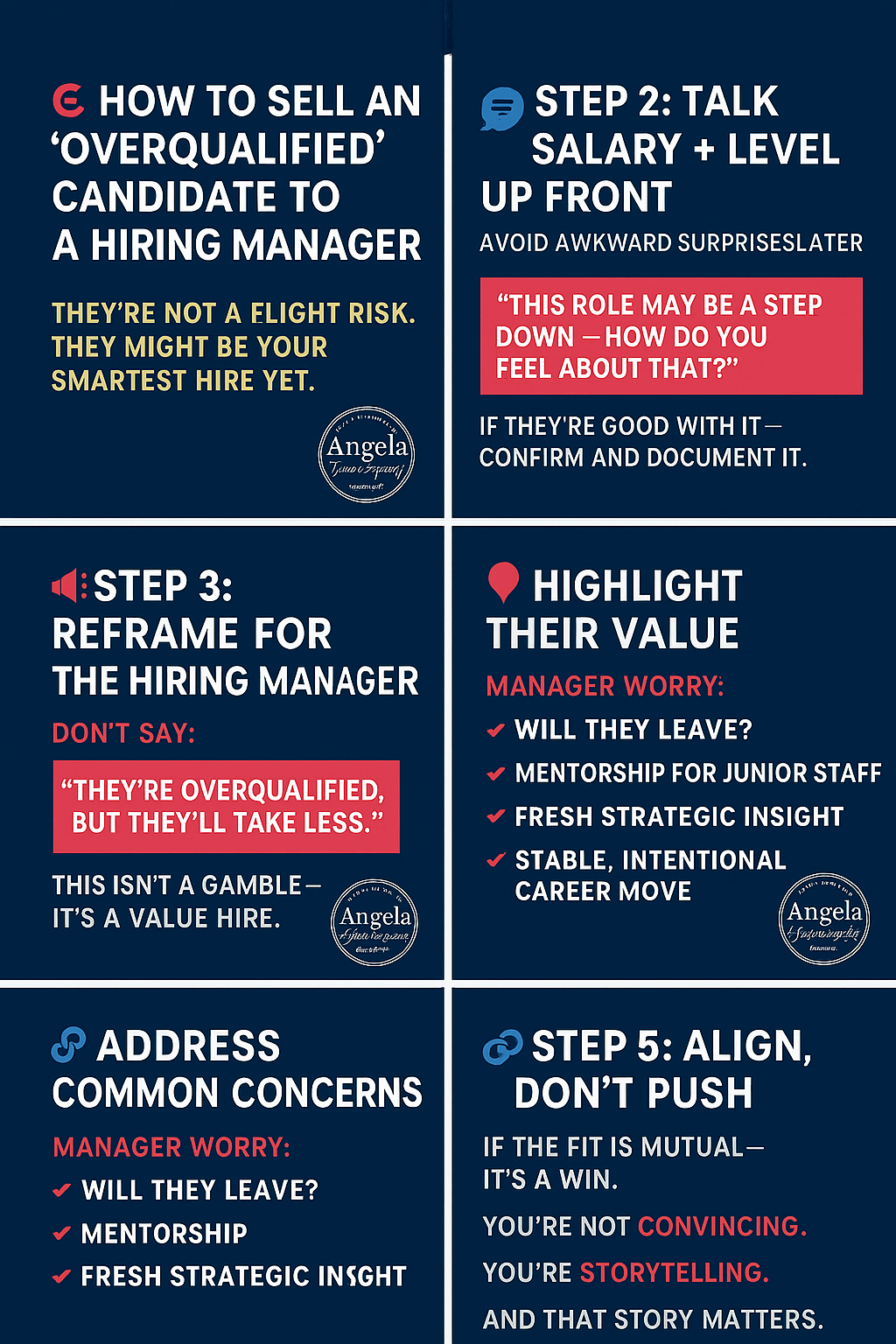
How to Sell an “Overqualified” Candidate to a Hiring Manager (and Why You Should)


As recruiters and talent advisors, we often hear a dreaded word when presenting experienced talent:

“They’re overqualified.”

Translation?
The hiring manager is concerned the candidate will get bored, won’t stick around, or is simply too expensive. But what if that “overqualified” label is actually a strategic advantage?

Here’s how to shift that narrative—and how to have the right conversation with the candidate to make sure everyone’s aligned before moving forward.


Step 1: Get Clear on the Candidate’s “Why”

Before you pitch a seasoned professional for a role that might look like a step back on paper, have an honest, empathetic conversation:

Ask the candidate:

  • What’s motivating you to consider this role right now?
  • How do you feel about the level/title compared to your last role?
  • What are your salary expectations? Are they flexible?
  • Are you looking for stability, mentorship opportunities, reduced stress, or a better work-life balance?

Many experienced professionals are making intentional decisions:

  • They’ve led large teams and now want to be individual contributors again.
  • They’ve done the high-travel, high-stress gig and want something more balanced.
  • They’ve had personal life changes that shift their priorities.
  • They want to align their work with a mission or product they care about.

Your goal? Understand why this role, now—and make sure their reasons are clear, realistic, and sustainable.


Step 2: Address Salary and Level Up Front

Here’s where things can get awkward if you avoid it—but powerful if you don’t.

Be direct:

“This role may come in under what you’ve made previously. Can you share what your current salary expectations are and how flexible you’re willing to be?”

If they’re open to a lower salary or step down in title, get that in writing (at least noted in your ATS). Transparency now prevents surprises later.

Be cautious if the candidate says “I’ll take anything”—dig deeper. Make sure the motivation aligns, or you risk a short-term hire.


Step 3: Reframe the Narrative for the Hiring Manager

Now that you’re clear on the candidate’s motivation and expectations, it’s time to present them strategically.

Don’t say:

“They’re overqualified, but willing to take less.”

Do say:

“This candidate brings deep expertise, but what excites them most is returning to hands-on work. They’re looking for a role where they can make an immediate impact without managing a large team or chasing titles.”

Focus on:

  • Speed to productivity: They’ve done this before—no steep learning curve.
  • Mentorship capacity: Great for junior team development.
  • Stability: If they’re shifting gears in life/career, they may stay longer than someone climbing the ladder.
  • Strategic value: They can bring insights that go beyond the current role.

💡 Pro tip: Position this as a “value hire,” not a compromise. You’re getting premium expertise at a practical cost.


Step 4: Tackle Concerns Proactively

Hiring managers often worry that the candidate:

  • Will leave as soon as something better comes along
  • Will struggle to take direction from a less experienced manager
  • Will be bored or disengaged

Here’s how to ease those concerns:

  • “We talked about that. They’re clear on their motivations, and they specifically want to contribute without being in charge.”
  • “They’ve worked under all kinds of leaders—they’re looking for collaboration, not control.”
  • “They’ve seen how stressful leadership can be. They want to focus on meaningful work and mentorship.”

Step 5: Align, Don’t Push

At the end of the day, the goal is alignment—not persuasion. If both sides are genuinely excited and aligned in expectations, it’s a win.

When handled right, “overqualified” becomes “highly qualified,” and what seemed like a risk becomes a strategic advantage.


Final Thought:

Don’t screen out someone just because they’ve done more.
Have the conversation. Ask the right questions.
Then present the right story to your hiring manager.

Because sometimes the best hire… isn’t the one climbing up—it’s the one who’s already been there and knows exactly what they want next.