Recruiting Tips

Why I Prefer Being an Individual Contributor Over a Manager

For much of my career, I’ve noticed an unspoken assumption: that “growth” means moving into management. Titles change, teams expand, and the expectation is that you’ll eventually trade in the hands-on work you love for people management, budgets, and performance reviews.

And while I deeply respect those who thrive as managers, I’ve come to realize something important about myself: I prefer being an individual contributor (IC). Not because I shy away from responsibility or leadership, but because my greatest strengths and sense of fulfillment come from contributing directly, not indirectly.

Here’s why that path works best for me—and why it deserves more recognition as a valid, powerful career choice.


Depth Over Breadth

As an IC, I get to go deep. I thrive when I’m immersed in the details—solving complex problems, building strategies, and delivering solutions hands-on. Management, by its nature, often pulls you toward breadth—overseeing projects at a higher level and delegating the execution.

For me, the details aren’t just details—they’re the work. They’re the place where strategy meets execution, and where real impact happens. I don’t just want to direct traffic; I want to build the road.


Leadership Without the Title

One of the biggest misconceptions is that leadership only lives in management roles. My career has taught me otherwise.

I’ve influenced hiring strategies, led cross-functional projects, and advised executives without ever having direct reports. Leadership is about influence, clarity, and trust—not hierarchy. Being an IC allows me to lead through impact, data, and expertise while staying close to the work that inspires me.


Agility and Focus

Management comes with critical responsibilities—budgets, performance reviews, team development. These are valuable tasks, but they also consume a significant amount of focus.

As an IC, I get to stay nimble. I can pivot quickly, adapt to changing priorities, and focus my energy on driving outcomes rather than navigating layers of process. This agility doesn’t just help me deliver faster—it keeps me motivated, creative, and engaged.


A Path of Continuous Learning

I love being a student of my craft. Every project, every new tool, every collaboration is an opportunity to sharpen my skills.

When you move into management, your growth often shifts toward people development, organizational strategy, and long-term planning. Important, yes—but different. Staying in an IC role allows me to keep learning the “how” as well as the “why,” pushing my expertise further instead of stepping away from it.


Redefining Career Fulfillment

Here’s the truth: not all growth is vertical. For years, career ladders were designed with one trajectory—up into management. But more organizations today are starting to recognize that individual contributors can be just as impactful, influential, and valuable as managers.

Fulfillment doesn’t always come from managing people. For me, it comes from being the trusted expert, the strategist, the problem-solver. From knowing that my fingerprints are directly on the work that drives results. That’s the kind of contribution that motivates me.


Final Thought

Management is a noble and important path, but it’s not the only one. I’ve chosen to embrace the IC journey because it allows me to do what I do best: dive deep, deliver impact, and lead through influence.

To me, that’s leadership in its purest form.

Career Development, Career Planning, Career Tips, jobs, networking, unemployment

The Cold Reality of Pivoting Careers While Unemployed

Pivoting careers is never easy. It’s a process that requires re-branding yourself, learning new skills, and often convincing hiring managers that your experience is transferable. Doing all of that while unemployed? That’s a whole different challenge—and one that many professionals, myself included, are facing right now.

The Stigma of Extended Unemployment

No matter how much we talk about breaking the stigma of gaps on a résumé, the reality is that being out of work for an extended period does raise questions in the eyes of employers. Algorithms in applicant tracking systems often filter out resumes with career breaks, and even when you do get in front of a recruiter, there’s sometimes an unspoken bias: “Why hasn’t anyone else hired you yet?”

This can make it even harder to pivot into a new career direction, where you’re not only battling the unemployment bias but also trying to prove you belong in a new function or industry.

The Hard Truth: Sometimes You Have to Step Back to Move Forward

One of the cold realities of job searching after a long unemployment stretch is that you may need to accept a step back—whether in title, pay, or both—to land your next opportunity.

That doesn’t mean you’ve failed. In fact, it can be a strategic choice. Sometimes a lateral or downward move is exactly what you need to:

  • Rebuild momentum in your career.
  • Gain exposure to a new industry or skill set.
  • Prove your adaptability and resilience.

Think of it less as a setback and more as a reset button—an intentional move to get yourself back in the game.

Why Networking Beats Applying in Today’s Market

The job market is more oversaturated than ever. Hundreds of qualified candidates apply for a single opening, and most never hear back. Submitting applications into the void isn’t a strategy—it’s a drain on your energy and confidence.

Networking, on the other hand, changes the game. Conversations open doors that applications can’t. Whether it’s a coffee chat, an informational interview, or a simple message on LinkedIn, relationships are where opportunities live. As the saying goes: people hire people, not résumés.

Some of the most effective networking tactics I’ve seen include:

  • Reconnecting with former colleagues who know your value.
  • Reaching out to people in your target industry to learn (not just to ask for a job).
  • Participating in professional groups, associations, or virtual meetups.
  • Contributing publicly—sharing insights, writing posts, or commenting thoughtfully—so your expertise stays visible.

Shifting the Mindset

The hardest part about this process isn’t the applications, the rejections, or even the interviews. It’s the mindset shift. Accepting that your next step may not be a perfect upward trajectory can sting. But when you reframe it as a strategic career pivot rather than a failure, the path forward becomes clearer.

Resilience, humility, and adaptability are not just buzzwords—they’re survival skills in today’s market. And they’re also the very qualities that make you an asset to future employers.

A Call to Those in the Same Boat

If you’re navigating unemployment while trying to pivot careers, know this: you’re not alone. Many talented professionals are walking this road right now. The oversaturated market doesn’t diminish your skills, your experience, or your worth.

What it does mean is that strategy matters more than ever. Be open to redefining success, willing to take a step back if it sets you up for future growth, and bold enough to lean on your network instead of going it alone.

Because sometimes the most important part of a pivot isn’t the direction of the move—it’s the fact that you keep moving.

Recruiting Tips

How to Sell Yourself in an Interview When You’re Not Good at Talking About Yourself


Job interviews are often as much about selling yourself as they are about showcasing your skills and experience. But what if you’re someone who struggles with talking about yourself, or you feel uncomfortable boasting about your achievements? You’re not alone. Many people find it difficult to promote themselves, especially in a formal setting where it feels like a “performance.”

The good news is that there are ways to overcome this challenge and confidently present your strengths in an interview, even if talking about yourself feels unnatural. Here’s how to do it:

1. Shift the Focus to the Value You Bring

Instead of framing your experience as “bragging,” think of it as a conversation about how you can contribute to the company’s success. Rather than saying, “I’m great at problem-solving,” reframe it like this: “In my last role, I was able to reduce operational costs by 20% through identifying inefficiencies in the workflow.” This shifts the focus from you as an individual to the tangible value you provided. You’re not just talking about yourself—you’re demonstrating how your skills can benefit the employer.

2. Use Stories to Showcase Your Skills

One of the easiest ways to talk about your strengths without feeling like you’re showing off is by telling a story. People connect with stories much more than they do with abstract statements. When asked about your strengths or past experience, consider using the STAR method: Situation, Task, Action, Result. Instead of saying, “I’m a great team player,” tell the interviewer about a time you collaborated with a team to solve a problem and the positive outcome that resulted. By framing your experiences this way, you highlight your value in a natural and relatable manner.

3. Prepare and Practice—But Keep It Conversational

The more you practice talking about your achievements, the more comfortable you will become with it. Try writing out a few key points about your background and successes, then rehearse them until you can say them comfortably without sounding rehearsed. But don’t make it sound like a script—interviews are about conversation, not a monologue. Focus on being authentic and conversational rather than robotic.

4. Embrace Humility, But Don’t Understate Your Impact

It’s natural to feel humble, but undervaluing your contributions can hurt your chances. In interviews, balance humility with a clear acknowledgment of your successes. It’s not about bragging; it’s about being honest and factual. Instead of downplaying your accomplishments, share them in a way that highlights the impact they had on the team or organization. You can say, “I’m proud of the work we did as a team to increase revenue,” while still owning your role in the outcome.

5. Know Your Strengths (And Be Ready to Explain Them)

It’s easy to get stuck in the mindset of “I don’t know what I’m good at.” But everyone has strengths. Take some time to reflect on your past roles—what are the moments when you’ve excelled? What feedback do you often receive from colleagues or managers? By knowing your strengths and being able to talk about them clearly, you’ll feel more confident and prepared in an interview. And if you’re not sure about your strengths, consider asking a colleague, mentor, or friend to help you identify them. Their perspective might surprise you.

6. Be Authentic

One of the most compelling ways to sell yourself is by simply being yourself. It’s easy to fall into the trap of thinking you need to be someone you’re not in an interview, but authenticity resonates. If you’re passionate about something or you’ve faced challenges, share that. Employers value honesty and transparency, and they are looking for people who are both competent and genuine. Don’t be afraid to show your personality, as long as it aligns with the professional tone of the interview.

7. Turn Weaknesses into Strengths

If you’re worried about a weakness or gap in your experience, own it—but also show how you’re working to overcome it. For example, if public speaking isn’t your strong suit, talk about how you’ve been taking steps to improve, such as attending workshops or volunteering for presentations. By showing self-awareness and a proactive attitude, you demonstrate growth and resilience.

8. Remember, It’s a Two-Way Street

Finally, remember that an interview is as much about you evaluating the company as it is about them evaluating you. You’re not just “selling” yourself to the company, but also determining if this job and company align with your values, goals, and work style. Approach the conversation as a dialogue, and that mindset will help take the pressure off of “selling” yourself.


Final Thoughts:
If you’re not good at talking about yourself, it’s okay. But that doesn’t mean you can’t effectively communicate your value during an interview. With a little preparation, practice, and the right mindset, you can confidently share your strengths and experiences in a way that feels authentic and impactful.

Ultimately, you don’t have to be perfect at talking about yourself. Just be honest, be prepared, and focus on how your unique skills and experiences can contribute to the success of the team and the organization.

Good luck!

Recruiting Tips

Hobbies: The Mental Health Boost You Didn’t Know You Needed

In today’s “always-on” world, rest is often mistaken for laziness, and hobbies can seem like an indulgence we can’t afford. But here’s the truth: hobbies aren’t just a way to fill time—they’re a cornerstone of mental well-being.

If your days feel like an endless loop of work, chores, and digital noise, a hobby might be the missing puzzle piece to feeling more balanced, creative, and happy.


1. They’re a Natural Stress Reset

When you’re immersed in something you enjoy—whether that’s painting, running, or tending to plants—you enter a flow state. Time slows down, stress melts away, and your brain shifts from fight-or-flight mode into relaxation and repair. This isn’t just “feeling better”; it’s a physiological reset that helps lower cortisol levels and ease anxiety.


2. They Boost Your Mood and Resilience

Hobbies light up the brain’s reward system, releasing dopamine and serotonin. These feel-good chemicals are natural mood stabilizers that help you handle life’s inevitable curveballs with more grace and less burnout. In other words, that Saturday morning pottery class might actually be building your emotional armor.


3. They Keep Your Mind Sharp

Learning a new skill—whether that’s baking bread from scratch or teaching yourself a new language—forces the brain to form new neural pathways. This keeps your mind agile and helps prevent cognitive decline. Think of it as mental cross-training.


4. They Strengthen Social Connections

Many hobbies naturally bring people together: joining a local hiking club, attending a writer’s workshop, or playing in a community band. These connections reduce loneliness, foster belonging, and remind us we’re part of something bigger than ourselves.


5. They Give You a Sense of Purpose

Work can give us purpose, but it shouldn’t be our only source. Having personal projects you care about—finishing a quilt, growing a vegetable garden, or building a bookshelf—offers a sense of accomplishment that’s deeply fulfilling and entirely your own.


Final Thought

If life feels overwhelming, the answer might not be “do more” but do something different. Pick up that guitar you haven’t touched in years. Sign up for the photography workshop you’ve been eyeing. Try a new recipe just for fun.

Your mind—and your future self—will thank you.

Recruiting Tips

How to Be a Great Recruiter: Skills, Mindset, and Habits That Set You Apart

Recruiting isn’t just about filling jobs. It’s about building relationships, understanding people, and connecting the right talent to the right opportunity at the right time. A great recruiter isn’t measured solely by how fast they can close a role but by the quality of their hires, the trust they build, and the long-term impact they have on an organization’s success.

Whether you’re new to recruiting or a seasoned pro, here are the pillars that separate good recruiters from great ones:


1. Master the Art of Listening

The best recruiters talk less than they listen. This means:

  • Asking open-ended questions.
  • Understanding both what the candidate says and what they mean.
  • Listening to hiring managers beyond the job description to uncover what they truly need.

When you listen deeply, you can match skills, personalities, and career goals in a way that drives retention and satisfaction.


2. Be a Relationship Builder, Not a Transaction Closer

Recruiting is about people, not just positions. Great recruiters:

  • Stay connected with candidates even after they’ve landed a job.
  • Keep in touch with hiring managers between openings.
  • Build a talent pipeline before it’s needed.

When trust is your currency, people remember you — and they’ll call you first when they’re ready for their next move or have a hiring need.


3. Understand the Business Inside and Out

A recruiter who knows the company’s industry, products, challenges, and competitors will:

  • Ask smarter screening questions.
  • Better align hires with strategic goals.
  • Earn the respect of hiring managers as a true partner, not just a service provider.

4. Balance Speed with Quality

Speed matters — hiring managers don’t like empty seats. But great recruiters don’t sacrifice quality for the sake of quick wins.

  • Use data to track time-to-fill and quality-of-hire.
  • Present well-vetted candidates, not just anyone who looks good on paper.

Remember: a fast hire who fails costs more than taking a little extra time to find the right fit.


5. Be a Champion for Diversity, Equity, and Inclusion (DEI)

A great recruiter actively works to remove bias from the hiring process. That means:

  • Sourcing from diverse talent pools.
  • Using inclusive language in job descriptions.
  • Educating hiring teams on equitable hiring practices.

Inclusive hiring isn’t just the right thing to do — it’s a business advantage.


6. Leverage Technology, But Stay Human

AI sourcing tools, applicant tracking systems, and recruitment marketing platforms can save time — but they’re not a substitute for the human touch.

  • Use tech to automate repetitive tasks.
  • Spend freed-up time on relationship-building, market research, and candidate engagement.

7. Keep Learning and Adapting

The job market changes fast — skills in demand today may be outdated tomorrow.

  • Stay on top of hiring trends and salary benchmarks.
  • Learn new sourcing strategies.
  • Invest in professional development to stay sharp.

8. Be Transparent and Communicative

One of the biggest complaints from candidates is ghosting. Great recruiters:

  • Keep candidates updated, even if there’s no news.
  • Give constructive feedback when possible.
  • Set realistic expectations on timelines and next steps.

A little communication goes a long way in building your reputation.


Final Thoughts

A great recruiter is part detective, part salesperson, part coach, and part cheerleader. They’re curious, empathetic, strategic, and relentless in the pursuit of matching the right talent to the right opportunity.

If you want to stand out in recruiting, focus on the people, the process, and your own professional growth. That’s the real secret to long-term success.

Recruiting Tips

So You Just Got Laid Off? Here’s What You Really Do.

First things first: breathe. Then cry, scream into a pillow, or rage-clean your kitchen. Whatever you need to do, get it out. Because tomorrow, you’re not waking up unemployed. You’re waking up unleashed.

Now, sleep. Not revenge-scroll, pass-out-at-2AM sleep. I mean actual, under-the-weighted-blanket, REM-cycle, full-body-reset kind of sleep. Your brain just got sucker-punched. It needs a nap, not a panic spiral.

Once you’re rested, start moving. Not because you’re “finally going to get fit,” but because motion helps emotion pass through. Walk the dog. Dance badly in the living room. Stretch until something cracks (hopefully a joint, not your spirit). This isn’t a makeover montage. It’s about reclaiming your body from the stress grip of capitalism.

Hydrate. I know, it’s basic. But it works. Water, not wine. (Or at least not only wine.)

Now set a rule: 3 hours max per day on job stuff. Applications. Resume tweaks. Networking emails. That’s it. The rest of the day? Off limits. Nobody’s hiring you at midnight, and LinkedIn isn’t handing out gold stars for burnout.

You’ve been conditioned to think panic = productivity. It doesn’t. Focus > frenzy. And no, sending out 87 résumés in one sitting won’t bring you faster offers. It brings carpal tunnel and existential dread.

Instead, get outside your bubble. Volunteer once a week. This isn’t charity—it’s therapy. You need to feel useful. Needed. Human. Plus, good people hang out in places like food banks and animal shelters. You might even make a friend. Or hear about a job. Or remember what matters.

Also, read a novel. Yes, fiction. No, not one that turns into a TED Talk. Just a good story. Your brain needs to visit another world. (The real one sucks right now.) Bonus points if you get it from the library.

And that project you keep whispering to yourself about? Start it. Write the first line. Record the video. Build the thing. Doesn’t matter if no one sees it. This isn’t about going viral. It’s about not dying with your dream trapped inside a bullet point on your résumé.

This period of your life—the messy, uncertain, unstructured time—is not a waiting room. It’s a training ground. And it won’t last forever. So don’t waste it trying to impress people who never noticed when you were employed anyway.

One last thing: You are not a job title. You are not your productivity score. You are not someone’s “headcount.” You are a fully formed, wildly capable human being who just got a second chance at choosing what comes next.

So, choose with intention. Choose with courage.

Now close the tab, make a sandwich, and go be free for a bit.

#layoff #jobsearch #careertransition #recoverytime #mentalhealth #jobhunt #reframe #restisproductive #careerchange

Recruiting Tips

How to Ace a Job Interview as a Neurodivergent Candidate

By Angela Malagon

Navigating job interviews can be stressful for anyone—but for neurodivergent individuals, the experience may feel especially challenging. From decoding unspoken social cues to managing sensory overload or masking behaviors, the traditional interview process isn’t always designed with neurodiversity in mind.

But here’s the truth: your brain is a strength, not a flaw. You bring unique perspectives, problem-solving abilities, and creative insights that employers need—even if the interview process wasn’t built for you. The good news? With preparation, self-advocacy, and the right strategies, you can show up authentically and confidently.

Here’s how to interview as a neurodivergent candidate—and thrive while doing it.


1. Know Your Strengths and Name Them Clearly

Many neurodivergent individuals struggle with imposter syndrome or downplay their accomplishments. But in an interview, you must be your own advocate.

Prepare a few examples of your strengths—whether that’s attention to detail, pattern recognition, innovative thinking, hyperfocus, or emotional insight.

✅ Practice framing your neurodivergence as an asset to the job. For example:

“Because of my ADHD, I’ve learned to develop strong time-blocking systems that help me manage complex projects across multiple stakeholders.”


2. Ask for Accommodations (If You Need Them)

You have the right to reasonable accommodations in the interview process. Whether it’s receiving questions in advance, turning off your camera during a virtual interview, or interviewing in a quiet space—don’t be afraid to ask.

🔹 You can frame it like this:

“To help me perform at my best, would it be possible to share the interview format or questions ahead of time?”

Remember: requesting accommodations is not asking for special treatment—it’s asking for equity.


3. Practice, but Don’t Over-Mask

Many neurodivergent folks are experts at “masking” to blend in. But constantly suppressing natural behaviors (like fidgeting, scripting responses, avoiding eye contact) can be draining and inauthentic.

👉 Instead, find your middle ground. Practice key talking points, but don’t feel like you have to pretend to be neurotypical. If flapping your hands helps you focus—do it. If maintaining eye contact is difficult, focus on the interviewer’s nose or forehead.

You are not “less professional” for being yourself.


4. Use the STAR Method with a Twist

Structured responses can reduce anxiety and keep you on track. The STAR method (Situation, Task, Action, Result) is a great format, especially when communication is a challenge.

✨ Bonus tip: Have your stories written out or sketched visually beforehand so you can reference them during the interview (if allowed).


5. It’s Okay to Take Notes or Pause

Interviews aren’t speed tests. You can pause. You can say, “Let me take a moment to think about that.” You can even write things down if it helps organize your thoughts.

➡️ Try this:

“Great question—let me take a second to organize my thoughts so I can give a clear answer.”

This shows thoughtfulness and self-awareness—not weakness.


6. Know That Disclosure is a Personal Choice

You are never required to disclose your neurodivergence unless you want to. If you do choose to disclose, try tying it back to your value as a candidate.

Example:

“As someone who’s autistic, I tend to thrive in environments that are detail-oriented and structured. That’s why I was drawn to this role.”

Only disclose if it feels empowering or necessary—not out of obligation.


7. Decompress Afterwards

Neurodivergent brains often need extra recovery time after social interactions. Interviews can be overstimulating, emotionally taxing, and mentally exhausting.

🧠 Afterward, give yourself time to decompress. Take a walk. Do something grounding. Be kind to yourself.


8. Reframe Rejection

If you don’t get the job, it’s not because you’re “too much” or “not enough.” Interviews are often biased toward neurotypical communication styles, and the process is flawed—not you.

🔄 Rejection isn’t a reflection of your worth. It’s redirection. You deserve a workplace that values who you are, not just how well you interview.


Final Thought: You’re Not Alone

More companies are waking up to the value of neurodiverse talent. You are part of a powerful community—of thinkers, dreamers, builders, analysts, creatives, and truth-tellers.

Keep showing up. Keep advocating. And remember: the right role won’t require you to hide who you are.


🔁 Share This With Someone Who Needs It

Whether you’re autistic, ADHD, dyslexic, or otherwise neuro-spicy, the world needs your mind—just as it is.

Recruiting Tips

Transferable Skills: The Secret Weapon in Selling Yourself as a Job Candidate

How to confidently communicate your value—even if you’re pivoting careers, returning to work, or feeling “underqualified”

When it comes to landing your next job, talent alone isn’t enough. Your skills matter—but so does your ability to clearly communicate how those skills solve problems, create impact, and align with the needs of the employer.

Whether you’re switching industries, reentering the workforce, or applying for a role that feels like a stretch, the key to standing out is learning how to leverage and sell your transferable skills.

Let’s break it down.


What Are Transferable Skills?

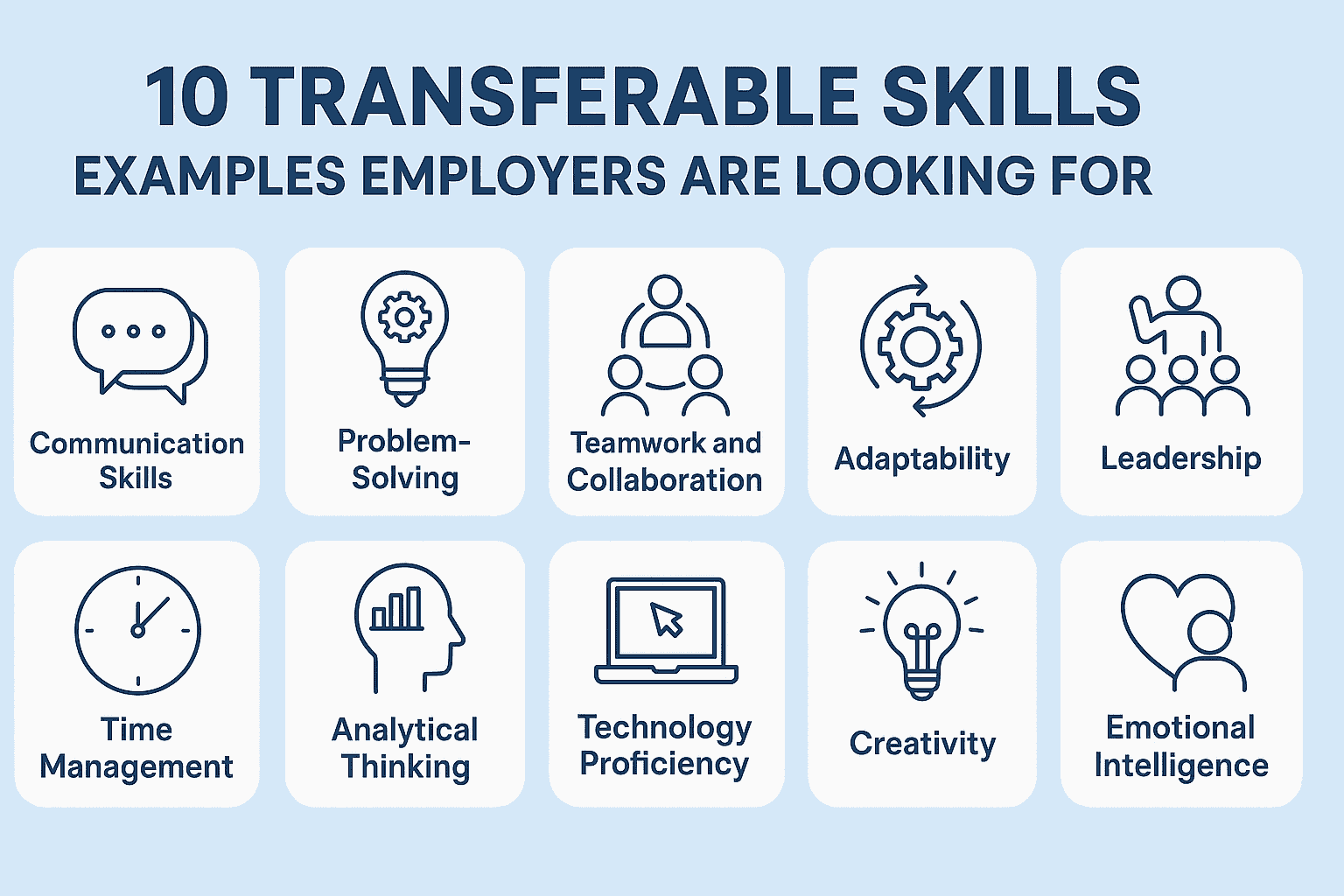
Transferable skills are abilities and strengths that carry over from one job or industry to another. These can be hard skills (like data analysis, project management, or budgeting) or soft skills (like leadership, communication, and adaptability).

They’re the universal tools in your professional toolbox—ready to be applied in different settings.

Examples include:

  • Project management
  • Cross-functional collaboration
  • Training and mentoring
  • Problem-solving
  • Digital literacy
  • Strategic thinking
  • Customer service
  • Conflict resolution
  • Change management
  • Emotional intelligence

Why Transferable Skills Matter More Than Ever

In a job market that’s constantly evolving—thanks to AI, remote work, and industry disruptions—employers value adaptability. They want to hire people who can jump in, learn quickly, and make an impact, even without traditional experience in the role.

That’s why transferable skills are gold. They demonstrate:

  • Your ability to evolve and grow
  • Your potential to succeed in new environments
  • Your readiness to take on challenges without being spoon-fed

Selling Yourself: It’s Not Bragging—It’s Clarity

Many job seekers downplay their achievements, especially when pivoting or applying to roles outside their previous experience.

But here’s the truth: If you don’t sell your story, someone less qualified will—and they’ll do it with confidence.

Here’s how to sell yourself effectively:

1. Translate Your Experience

Frame your past work in the language of your new target role. For example:

  • “Managed a classroom of 25 students” → “Led training sessions and conflict resolution with diverse groups under pressure”
  • “Handled customer complaints” → “Demonstrated empathy, active listening, and real-time problem solving in high-stress scenarios”

2. Connect the Dots

Don’t assume the hiring manager will automatically see how your experience fits. Spell it out. A simple sentence like:

“While I haven’t worked in SaaS before, my experience leading process improvements in fast-paced retail operations is directly aligned with this role’s focus on efficiency and customer success.”

3. Use Data and Impact

Whenever possible, quantify your wins:

  • Reduced onboarding time by 30%
  • Trained 15+ new hires with a 90% retention rate
  • Managed a $200K budget with zero overages

These metrics matter across industries.

4. Own Your Unique Perspective

Your background may be exactly what the team needs—a fresh viewpoint, untapped market insight, or hard-earned resilience. Stop apologizing for your path. Start positioning it as your edge.


Final Thoughts: Confidence is Contagious

Hiring managers don’t just hire resumes. They hire people they believe in. And people believe in those who believe in themselves.

So yes, update your resume and polish your LinkedIn. But most importantly—practice telling your story out loud. Speak your value until it becomes second nature. Focus on impact, not just job titles. And always remember:

Your transferable skills aren’t a fallback plan—they’re your competitive advantage.


Call to Action:

Have you successfully pivoted using transferable skills? Or struggling to identify your own? Drop a comment below or reach out—I’d love to hear your story. 👇

#JobSearchTips #TransferableSkills #CareerPivot #PersonalBranding #ConfidenceInCareer #HiringAdvice #CareerDevelopment #SellYourself #FutureOfWork #LinkedInTips

Recruiting Tips

Ageism in the Workplace: The Bias We Don’t Talk About Enough


We talk about equity.
We talk about diversity.
We talk about inclusion.

But do we talk enough about ageism?

Not nearly.

In a culture obsessed with youth, fast-paced growth, and flashy innovation, experienced professionals—especially those over 40—often find themselves overlooked, underestimated, or outright excluded.


What Does Ageism Look Like?

Ageism isn’t always blatant. It often shows up in quiet, insidious ways:

  • Job descriptions asking for a “digital native” (translation: don’t apply if you didn’t grow up with social media).
  • Recruiters worried you’re “overqualified” (code for “too expensive” or “won’t stay long”).
  • Hiring managers assuming you’re “set in your ways” or not tech-savvy.
  • A noticeable decline in interview requests once your graduation year is updated on LinkedIn.

These subtle cues send a loud message: You’re too old.


Why It’s a Problem

This isn’t just about hurt feelings—it’s about missed opportunities.

Older professionals bring unmatched value:

  • Institutional knowledge
  • Strong networks
  • Leadership maturity
  • Stability
  • Mentorship capacity

Excluding them isn’t just discriminatory—it’s bad business.


What Can We Do About It?

For Employers & Recruiters:

  • Audit job postings for age-biased language.
  • Focus on skills and impact over graduation dates.
  • Create age-diverse interview panels.
  • Value continuous learners—at every age.
  • Stop assuming ambition has an expiration date.

For Job Seekers Over 40:

  • Own your experience confidently—don’t downplay it.
  • Stay current on trends and tech (but don’t pretend to be 25).
  • Network with intention: build bridges, not just resumes.
  • Reframe “overqualified” as “immediately impactful.”

Real Talk: Passion Doesn’t Retire

Many of us in midlife are entering our second acts—careers built on purpose, not just paychecks. We’re not slowing down—we’re shifting gears.

So next time you think someone’s “too experienced” for a role, ask yourself:
Are they really too experienced, or are we just too biased?


It’s time to rewrite the narrative.
Age doesn’t define capability—opportunity does.


🧠 Let’s keep the conversation going.
If you’ve faced ageism or found a way to thrive despite it, share your story below. 👇
#AgeismAwareness #InclusiveHiring #CareerAtAnyAge #WorkforceWisdom #AngelaMalagon #TalentWithoutLimits

Recruiting Tips

How Recruiters Can Successfully Pivot Their Careers

From Talent Scouts to Strategic Powerhouses: Making the Shift with Transferable Skills


Recruiting is more than just filling jobs—it’s relationship building, strategic thinking, data analysis, marketing, and storytelling rolled into one. So what happens when a recruiter wants to make a career pivot? The good news is: you’re already armed with a powerhouse of transferable skills.

Whether you’re burned out from chasing reqs or ready to explore new challenges, recruiters are uniquely positioned to pivot into a wide range of roles across HR, operations, marketing, sales, and more.

Here’s how recruiters can make a successful career shift—and where your skills can take you.


🎯 First, Let’s Talk Transferable Skills

Recruiters wear many hats, often without even realizing how versatile their toolkit is. Here’s a breakdown of recruiter skills that apply across industries:

  • Stakeholder Management: Collaborating with hiring managers? That’s project management and client service experience.
  • Data Literacy: Analyzing time-to-fill, pipeline conversion, and source effectiveness? That’s analytics and business intelligence.
  • Sourcing + Research: Boolean searches and candidate deep-dives? That’s market research and investigative prowess.
  • Employer Branding: Crafting job descriptions and marketing roles? You’ve been in marketing this whole time.
  • CRM/ATS Tools: Familiar with systems like iCIMS, Workday, Greenhouse, or LinkedIn Recruiter? You’re already fluent in modern tech stacks.
  • Negotiation & Influence: Convincing a candidate to accept an offer and a hiring manager to compromise? That’s sales and stakeholder alignment.
  • Process Improvement: Streamlining interview workflows? You’ve been in operations all along.

🌱 Potential Career Paths for Recruiters Looking to Pivot

Here are some popular directions recruiters can grow into—without starting from scratch:

1. People Operations / HR Generalist

If you enjoy shaping the employee experience beyond the interview process, people ops is a natural move. You’ll use your stakeholder engagement, onboarding, and compliance knowledge to drive employee engagement and HR programs.

2. Talent Development / L&D

Love coaching candidates and helping them grow? Learning & Development could be a great fit. You already understand career paths, skills development, and how people learn.

3. Project or Program Management

Recruiters juggle req loads, timelines, and conflicting priorities daily—that’s classic project management. If you’re organized and data-driven, formalizing those skills through a PM role (or CAPM/PMP certification) could unlock major opportunities.

4. Marketing (Content or Employer Branding)

Recruiters are brand storytellers. If you enjoy writing job ads, managing social posts, or crafting outreach campaigns, a pivot into marketing, especially employer branding or content creation, could be seamless.

5. Customer Success or Sales

You’re already selling roles to candidates. Why not sell products or services? Recruiters with strong interpersonal skills and solution-oriented thinking thrive in client-facing sales or customer success roles.

6. Diversity, Equity & Inclusion (DEI)

If you’ve been driving inclusive hiring practices, a move into DEI allows you to scale that impact across the entire employee lifecycle.

7. HR Tech / Talent SaaS

Worked with tools like Greenhouse, Eightfold, or Beamery? Many recruiting platforms need customer advocates, implementation specialists, or product managers who deeply understand the recruiter’s experience.


🧭 Tips for Making the Pivot

  • Audit Your Skills: Use a tool like a skills matrix to map what you do today to what’s needed in your target role.
  • Upskill Where Needed: A short course on SQL, digital marketing, or agile PM can bridge the gap.
  • Tell a Compelling Story: Frame your pivot as a natural progression—not a departure. Highlight the impact you’ve made and how those skills apply in new contexts.
  • Rebrand Your Resume + LinkedIn: Tailor your profile and resume with the new career in mind. Swap out “recruiter-speak” for industry-aligned terms in your desired field.
  • Leverage Your Network: Use your sourcing skills on yourself—reach out, set up chats, and ask for referrals or advice from people in your target role.

💡 Final Thought: You’re Not Starting Over

Recruiters are uniquely equipped to pivot because we already operate at the intersection of people, data, and business strategy. Your next career move isn’t a leap—it’s a pivot built on a strong foundation of impact and insight.

You’ve helped hundreds of people land the right roles. Now it’s time to do the same for yourself.


Ready to pivot? Share in the comments what path you’re exploring, and let’s crowdsource support for recruiter career changers. 💼✨